
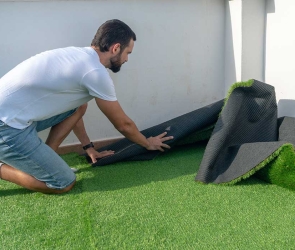
Artificial grass has become an ideal surface solution for both individual users and professional projects thanks to its durability, low maintenance requirements, and ability to stay green throughout the year. When applied correctly, it provides an aesthetic appearance for many years without the need for maintenance. Therefore, it is extremely important to plan every step of the artificial grass installation process properly. In addition, another topic many users wonder about during the process is the artificial grass installation cost. In this detailed guide, we will thoroughly examine the steps of artificial grass application, the costs, and the key points to consider.
What Is Artificial Grass and Why Is It Preferred?
Artificial grass offers a much more durable, climate-resistant, and low-maintenance surface compared to natural grass. Since it does not require watering, eliminates the need for mowing, and maintains its aesthetic appearance year-round, it is widely used from home gardens to sports fields.
It is also preferred in high-traffic areas such as sports facilities, hotel landscapes, children's playgrounds, and commercial projects. With its high UV resistance, water permeability, and strong fiber structure, it retains its form for many years.
1. Ground Analysis for Artificial Grass Installation
The first step for a successful artificial grass installation is ground analysis. No artificial grass applied without proper ground preparation will last for many years. Therefore, professionals evaluate the following criteria:
- Soil structure
- Water drainage condition
- Surface slope
- Condition of existing grass or concrete
- Purpose of use (high traffic, decorative area, sports use, etc.)
Based on ground analysis, drainage channels may be added, the surface slope can be corrected, or the existing ground can be reinforced.
2. Ground Preparation
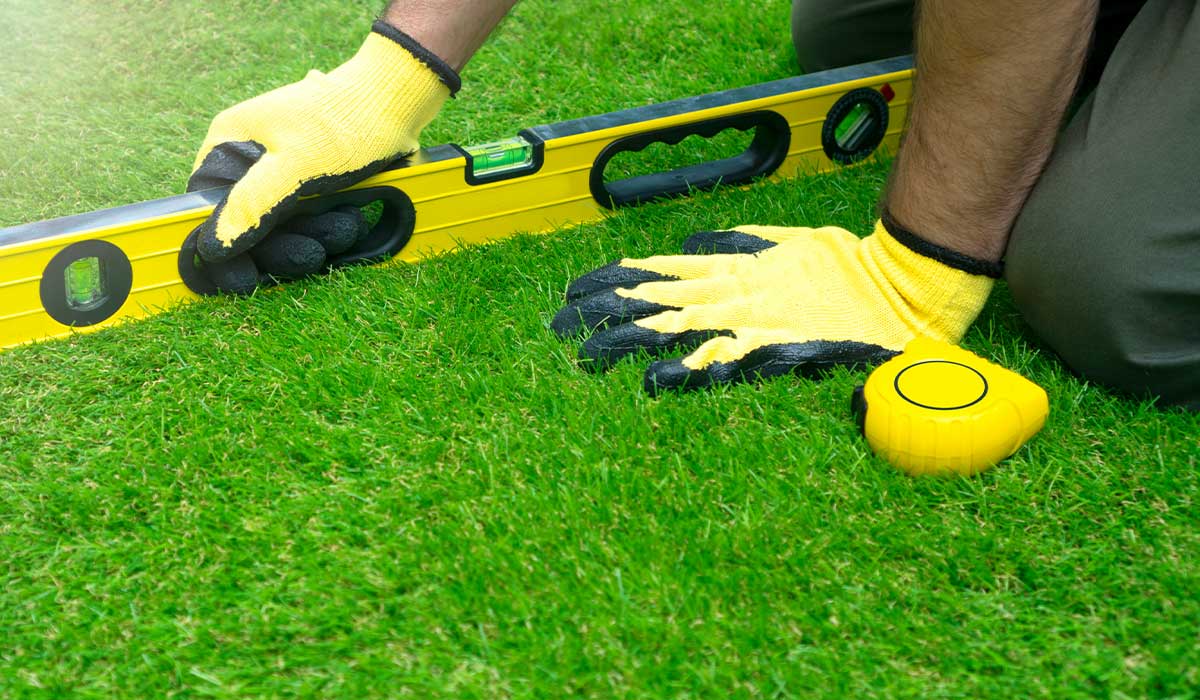
The most critical phase of the artificial grass installation process is ground preparation. If the sub-base is not strong, the artificial grass will ripple, sink, or fail to drain water correctly.
Basic steps followed in ground preparation:
- Removing the existing natural grass or cleaning the old surface
All weeds, roots, and plant residues are removed. - Excavation
Typically, 5–10 cm of excavation is done. This space is required for the base material. - Base application (crushed stone or gravel)
It accelerates water drainage, strengthens the ground, and prolongs the lifespan of the grass. - Surface compaction
Compaction is carried out with a vibrating compactor. A flat, hard, and durable surface is created.
This phase requires professionalism because incorrect filling or compaction can cause serious deformations later.
3. Cutting and Laying the Artificial Grass
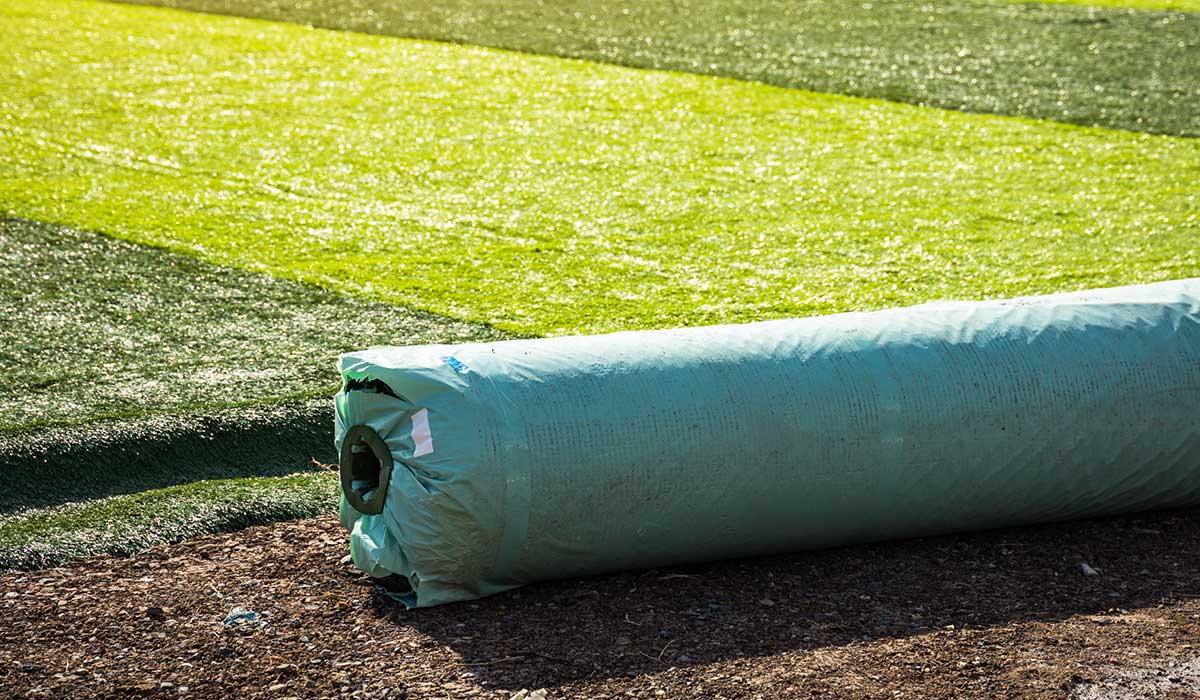
Once the ground is fully prepared, the artificial grass rolls are laid out. Important points to consider in this stage include:
- All rolls must have fibers aligned in the same direction
- No gaps should be left between rolls
- Cuts must be made precisely
- Edges must sit perfectly on the surface
The cutting process is done using a knife or a special cutting tool. Even a millimetric error should not be left at the joints to achieve a natural appearance.
4. Gluing the Seams (Seam Tape & Adhesive)
During artificial grass installation, when grass rolls are placed side by side, the seams must be glued using special seam tapes. This process ensures that the grass stays together for many years.
Professionals use the following tools:
- Seam tape
- Polyurethane artificial grass adhesive
- Spatula or adhesive spreader
Step-by-step gluing process:
- The grass edges are lifted.
- Seam tape is placed on the ground.
- Adhesive is applied onto the tape.
- The grass fibers are pressed onto the tape to secure the seam.
This step is extremely important for achieving an invisible joint.
5. Edge Fixing: Essential for Safe and Long-lasting Use
After the installation of artificial grass, the edges must be securely fixed. For this, the following can be used:
- Steel U-nails
- Screw-in fixing elements
- L-profiles for concrete surfaces
Unsecured edges will lift over time, threatening user safety and disrupting the aesthetics.
6. Silica Sand Filling and Brushing Process
One of the most important steps after laying artificial grass is the silica sand infill.
Benefits of silica sand:
- Keeps the grass fibers upright
- Provides weight to prevent the grass from lifting
- Creates a more natural feel
- Reduces deformation
- Supports water drainage
In the final stage, professional brushing machines are used to lift the fibers upward, giving the surface a completely natural appearance.
What Determines the Artificial Grass Installation Cost?
Many users seek clear information about artificial grass installation cost. Costs vary depending on the following factors:
1. Quality of the grass used
The longer the fiber length, the higher the dtex value, UV resistance, and density, the higher the price.
2. Ground preparation requirements
Excavation, base application, and drainage work constitute a major part of the cost.
3. Total square meters of the area
Larger areas have lower unit costs, while small areas are relatively more expensive.
4. Purpose of the project
Decorative gardens are more economical, while sports fields require more durable grass, increasing costs.
5. Labor costs
Professional teams complete the process quickly, smoothly, and flawlessly; therefore, working with the right installers ensures long-term savings.
Maintenance and Usage Recommendations
Although artificial grass requires low maintenance, the following steps will ensure long-term durability:
- Regular brushing
- Silica sand top-up when necessary
- Removal of leaves and debris
- Cleaning pet-used areas
- Cooling with water during extreme heat
These simple steps help maintain the form of the grass after installation.
Integral Group x Avengrass
Integral Group’s artificial grass brand Avengrass ensures long-lasting and trouble-free use through proper planning, professional ground preparation, and high-quality materials. When each step is carried out with care, artificial grass delivers an appearance and performance very close to natural grass. Before starting your project, you can make the right investment decision by evaluating both the technical requirements and the artificial grass installation cost.
If you are looking for a durable, aesthetic, and low-maintenance solution for your home, garden, terrace, or sports area, artificial grass is definitely one of the best options.